
Sciatica Treatment in Hyderabad: Symptoms, Causes and Non-Surgical Options
A doctor-written guide to sciatica: what causes leg pain from the back, when to see a specialist, and the non-surgical treatments available in Hyderabad.


Sample article for demonstration. It will be reviewed and replaced by the clinic.
TL;DR Quick answer
Sciatica is leg pain caused by an irritated nerve root in the lower back, most often from a slipped disc. Most people improve within weeks with activity, medicines and physiotherapy. If pain persists beyond 4–6 weeks, image-guided treatments such as an epidural injection may help; bladder or bowel changes need emergency care.
Key takeaways
- Sciatica is leg pain caused by an irritated nerve root in the lower back
- Most people improve without surgery
- See a specialist if pain lasts more than 4 to 6 weeks or disturbs sleep and work
- Seek emergency care for bladder or bowel changes or weakness in both legs
- Image-guided epidural injections are a day-care option when pain persists
Sciatica is one of the most common reasons people in Hyderabad see a pain specialist. Long commutes, hours at a desk and heavy lifting all put strain on the lower back, and when a nerve root is irritated the pain can travel all the way down the leg. The good news is that most people improve without surgery. This guide explains the symptoms, causes and the non-surgical options available, and when it is time to see a specialist.
What is sciatica?
Sciatica is pain that follows the path of the sciatic nerve, from the lower back through the buttock and down the back of one leg. It is a symptom rather than a diagnosis: something is irritating or pressing on one of the nerve roots in the lower spine.
Common symptoms of sciatica
- Pain that starts in the lower back or buttock and travels down one leg, often below the knee
- Burning, shooting or electric-shock sensations
- Numbness, tingling or pins and needles in the leg or foot
- Weakness when lifting the foot or standing on the toes
- Pain that is worse when sitting, coughing or sneezing
| Symptom | How common | What to do |
|---|---|---|
| Pain from the buttock down one leg | Very common | Stay gently active; see a specialist if it lasts over 4–6 weeks |
| Tingling or numbness in the leg or foot | Common | Mention it at your consultation |
| Weakness lifting the foot | Less common | Book a prompt specialist assessment |
| Loss of bladder or bowel control, or numbness in the saddle area | Rare | Seek emergency care immediately |
What causes sciatica?
The most common cause is a herniated or slipped disc, where the soft centre of a disc presses on a nearby nerve root. Other causes include:
- Spinal stenosis, a narrowing of the spinal canal that is more common with age
- Spondylolisthesis, where one vertebra slips forward on another
- Piriformis syndrome, where a buttock muscle irritates the nerve
- Less commonly, infection or a growth near the spine
When should you see a pain specialist?
Mild sciatica often settles within a few weeks with activity and simple measures. Book an assessment if:
- Pain lasts longer than four to six weeks
- Pain is severe enough to disturb sleep or stop you working
- Medicines are not helping or cause side effects
- Symptoms keep coming back
Seek emergency care immediately if you develop loss of bladder or bowel control, numbness around the groin or buttocks, or weakness in both legs. These can be signs of cauda equina syndrome, which needs urgent treatment.
How sciatica is diagnosed
A specialist starts with a detailed history and a physical and neurological examination, including tests of leg strength, reflexes and sensation. An MRI scan is usually recommended when symptoms are severe or persistent, or when a procedure is being considered, because it shows the discs and nerves clearly.
Non-surgical treatment options
Treatment is matched to the cause and to how much the pain affects your life. Options usually build in steps:
| Option | What it involves | Setting | Usually considered |
|---|---|---|---|
| Medicines | Short courses of anti-inflammatories; nerve pain medicines | Outpatient | First, alongside activity |
| Physiotherapy | Guided exercises for strength and flexibility | Clinic and home | Early, for most people |
| Epidural steroid injection | Image-guided medicine next to the irritated nerve | Day care, 15–30 min | When leg pain persists despite first-line care |
| Selective nerve root block | Targeted injection at one nerve level | Day care | To confirm and treat a specific nerve |
| Surgery | Relieving pressure on the nerve | Hospital | Severe or progressive weakness, or failed non-surgical care |
Medicines
Short courses of anti-inflammatory medicines and, for nerve pain, medicines that calm overactive nerves. A specialist reviews what you already take to keep treatment safe.
Physiotherapy and staying active
Guided exercises strengthen the core and back muscles and improve flexibility. Gentle walking usually helps more than bed rest.
Epidural steroid injection
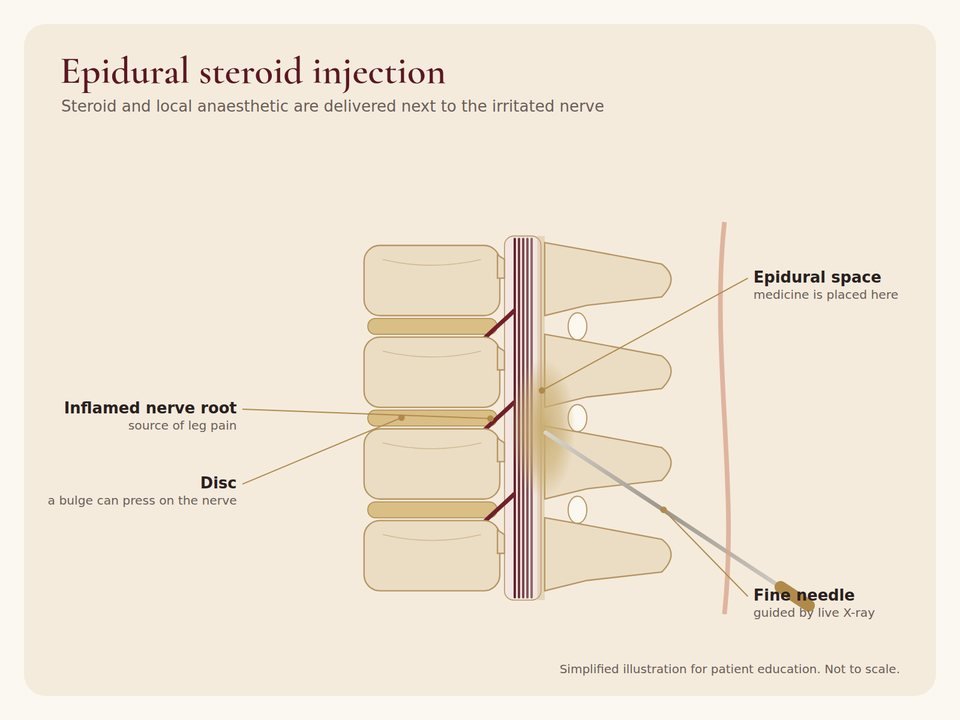
When leg pain persists, an epidural steroid injection places anti-inflammatory medicine next to the irritated nerve root under X-ray guidance. It is a day-care procedure.
Other image-guided options
A selective nerve root block can confirm which nerve is affected and treat it. For selected patients with persistent nerve pain, pulsed radiofrequency treatment may be considered.
What to expect from an image-guided injection
- A consultation and review of your MRI first
- Local anaesthetic to numb the skin
- The procedure usually takes 15 to 30 minutes
- A short rest, then home the same day
- Follow-up to check progress and plan exercises
Recovery and self-care tips
- Keep moving: short, regular walks are better than long periods of sitting
- Take breaks from your desk every 30 to 45 minutes
- Lift with your knees and keep loads close to your body
- Use heat or ice for short periods if it helps
- Continue the exercises your physiotherapist gives you
Choosing a sciatica specialist in Hyderabad
When choosing where to be treated, look for:
- A doctor with recognised training in pain medicine
- Image-guided (X-ray or ultrasound) procedures performed in a suitable procedure room
- A clear explanation of all options, including non-surgical ones, with their benefits and risks
- A plan that includes rehabilitation, not injections alone
- Easy follow-up if your symptoms change
If sciatica is affecting your daily life, a specialist assessment is the first step towards the right treatment.
References and further reading
- National Institute for Health and Care Excellence (NICE). Low back pain and sciatica in over 16s: assessment and management (NG59).
- NHS. Sciatica.
Downloads


Frequently asked questions
How long does sciatica last?
Many episodes improve within four to six weeks. Pain that lasts longer, keeps returning or is severe should be assessed by a specialist.
Is walking good for sciatica?
Yes, for most people. Short, regular walks help keep the spine moving. Stop and seek advice if walking makes leg pain much worse.
Do I need an MRI for sciatica?
Not always. An MRI is usually recommended when symptoms are severe or persistent, or before a procedure.
Is an epidural injection safe?
When performed under image guidance by a trained specialist, serious complications are rare. Your doctor will discuss the specific risks with you.
Consultant Pain Physician
View full profile →This page is for general information. Whether a treatment is suitable for you is decided after an individual consultation.

